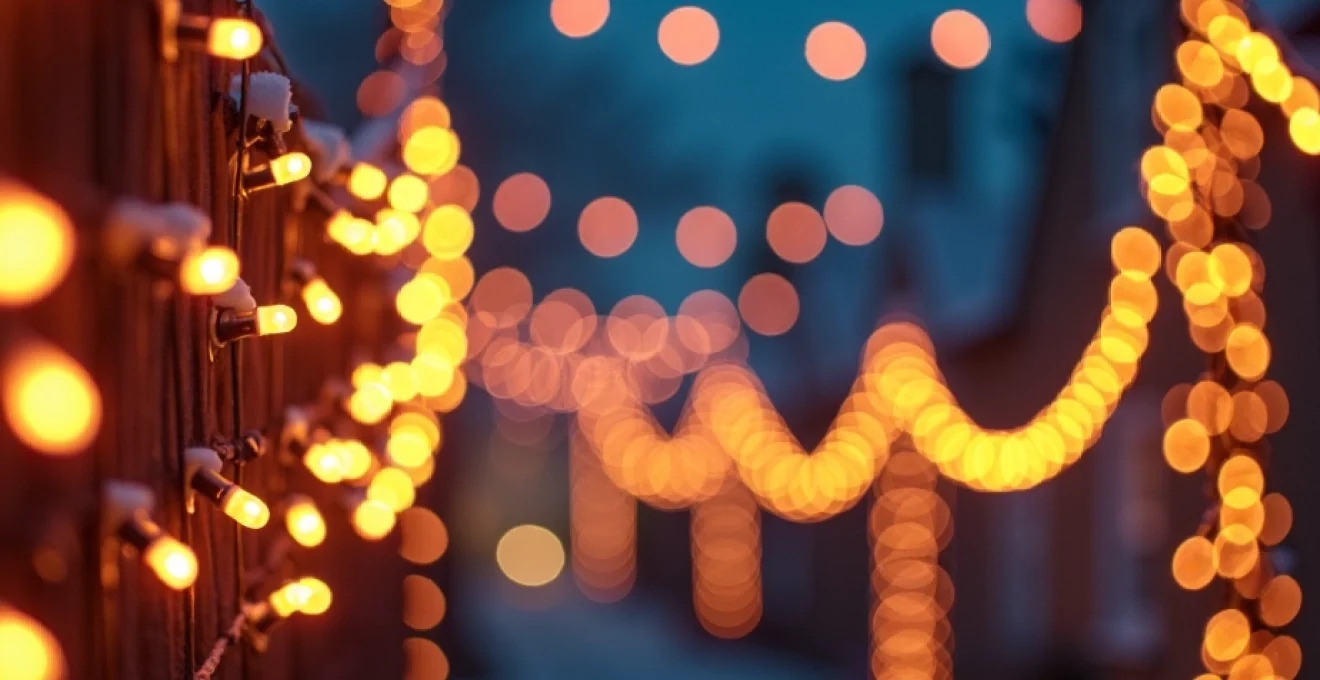
The festive glow of Christmas lights transforms neighbourhoods into winter wonderlands, yet for approximately one-third of the population living with astigmatism, this seasonal spectacle appears dramatically different. Rather than crisp, distinct points of light, these individuals perceive elongated streaks, starbursts, and halos that create an almost ethereal viewing experience. This optical phenomenon occurs due to the irregular curvature of the cornea or lens, fundamentally altering how light rays converge within the eye. Understanding the intricate relationship between astigmatic refractive errors and holiday lighting illuminates both the challenges and unexpected beauty that millions experience during the Christmas season. The distortion isn’t merely an inconvenience—it represents a fascinating intersection of optical physics and human perception that deserves comprehensive exploration.
Understanding astigmatic refractive errors and light distortion mechanisms
Astigmatism represents one of the most prevalent refractive errors affecting human vision, characterised by an irregular curvature of the cornea or crystalline lens that prevents uniform light ray convergence. In a healthy eye, these structures maintain a spherical shape resembling a basketball, enabling light rays to focus precisely on the retina. However, astigmatic eyes exhibit an oval or football-shaped curvature, creating multiple focal points rather than a single, sharp focus. This fundamental deviation from optimal optical geometry underlies the distinctive visual distortions experienced when viewing Christmas lights and other point light sources.
Corneal and lenticular astigmatism impact on light ray convergence
The two primary categories of astigmatism—corneal and lenticular—each contribute uniquely to light distortion patterns. Corneal astigmatism, accounting for approximately 85% of all cases, originates from irregular anterior corneal surface curvature. This condition creates varying refractive powers across different meridians, causing horizontal and vertical light rays to focus at different distances from the retina. Lenticular astigmatism , whilst less common, stems from irregularities within the crystalline lens structure, producing similar but often more subtle distortion effects.
The interaction between these anatomical variations and incoming light rays follows predictable optical principles. When parallel light rays encounter an astigmatic cornea, they undergo differential refraction based on the meridional curvature variations. This selective focusing creates the characteristic streaked appearance of Christmas lights, where the elongated distortion typically aligns with the steepest corneal meridian. The severity of this effect correlates directly with the magnitude of astigmatic error, measured in dioptres of cylindrical power.
Cylindrical power measurements and axis orientation effects
Astigmatic correction requires precise measurement of both cylindrical power and axis orientation, parameters that directly influence how Christmas lights appear to affected individuals. Cylindrical power, expressed in negative dioptres (e.g., -1.00, -2.50, -4.00), quantifies the degree of corneal irregularity, whilst the axis indicates the meridional orientation of maximum curvature. These measurements determine the specific direction and extent of light distortion patterns observed during holiday displays.
The axis orientation particularly affects the visual appearance of Christmas lighting arrangements. With-the-rule astigmatism , featuring steeper vertical meridians (axis between 70-110 degrees), typically produces horizontal light streaks. Conversely, against-the-rule astigmatism , characterised by steeper horizontal meridians (axis between 160-20 degrees), generates vertical light elongation. Oblique astigmatism, with axes between these ranges, creates diagonal distortion patterns that can appear particularly dramatic when viewing rows of Christmas lights.
Irregular astigmatism vs regular astigmatism light scattering patterns
The distinction between regular and irregular astigmatism significantly influences Christmas light perception and correction possibilities. Regular astigmatism maintains consistent curvature differences across each meridian, producing predictable and correctable distortion patterns. These cases typically respond well to cylindrical lens correction, allowing for improved Christmas light clarity through appropriate spectacle or contact lens prescriptions.
Irregular astigmatism presents a more complex challenge, featuring unpredictable corneal surface variations that create scattered, multifocal light patterns. This condition, often resulting from corneal scarring, keratoconus, or previous surgical procedures, produces chaotic light distortion that standard cylindrical correction cannot adequately address. Individuals with irregular astigmatism may experience Christmas lights as fragmented, multiple images rather than simple elongated streaks, requiring specialised contact lens designs or surgical intervention for optimal correction.
Dioptre variations and their role in christmas light aberrations
The progression of astigmatic error severity directly correlates with the intensity of Christmas light distortion effects. Mild astigmatism (0.25 to 1.00 dioptres) may produce subtle light elongation that becomes more noticeable in low-light conditions typical of evening holiday displays. Moderate astigmatism (1.25 to 2.00 dioptres) creates pronounced streaking effects that can extend several times the actual light source diameter, transforming individual bulbs into elongated beams.
High astigmatism exceeding 2.00 dioptres generates dramatic distortion effects where Christmas lights appear as extensive starbursts or comet-tail formations, often extending far beyond the original light source boundaries.
These dioptre-dependent variations explain why some individuals with astigmatism report minimal Christmas light distortion whilst others experience significant visual effects. The relationship between cylindrical power and perceived distortion follows an approximately linear progression, with each additional dioptre of astigmatic error proportionally increasing the light streak length and intensity. This correlation enables eye care professionals to predict expected visual symptoms based on refractive measurements and helps patients understand their specific viewing experiences.
Optical physics behind christmas light distortion in astigmatic eyes
The optical mechanisms underlying Christmas light distortion in astigmatic eyes involve complex interactions between incident light waves and irregularly curved refractive surfaces. When coherent light rays from LED Christmas displays encounter an astigmatic cornea, they undergo selective refraction based on the varying curvature across different meridians. This differential bending creates multiple focal lines rather than a single focal point, fundamentally altering the perceived image formation on the retinal surface.
Point light source transformation into streaked images
The transformation of discrete Christmas light points into elongated streaks represents a fundamental optical aberration inherent to astigmatic systems. In ideal optical conditions, a point light source should produce a corresponding point image on the retina. However, astigmatic eyes create two perpendicular focal lines separated by the interval of Sturm , with the circle of least confusion positioned between these extremes. This geometric relationship explains why Christmas lights appear as streaks oriented perpendicular to the steepest corneal meridian.
The streak formation follows predictable optical principles based on the astigmatic interval and pupil diameter. Larger pupil sizes, common during evening Christmas light viewing, increase the magnitude of light streaking by admitting more peripheral light rays that undergo greater differential refraction. This pupil-dependent effect explains why Christmas light distortion appears more pronounced during nighttime outdoor displays compared to well-illuminated indoor settings where pupil constriction minimises aberrant light ray admission.
LED wavelength dispersion through astigmatic optical systems
Modern LED Christmas lights emit relatively narrow wavelength spectra compared to traditional incandescent bulbs, yet astigmatic eyes can still experience chromatic dispersion effects that enhance light distortion. The wavelength-dependent refractive index variations within corneal and lenticular tissues create slight chromatic aberration that becomes amplified by the irregular curvature of astigmatic eyes. Blue LED wavelengths, common in contemporary Christmas displays, undergo greater refraction than red wavelengths, potentially creating colour-separated streak patterns.
This chromatic dispersion effect becomes particularly noticeable with white LED Christmas lights that contain multiple phosphor-converted wavelengths. Astigmatic individuals may perceive subtle colour fringes along the edges of light streaks, with cooler blue tones appearing more displaced than warmer red components. The phenomenon demonstrates how wavelength-specific refractive differences interact with astigmatic aberrations to create complex, multi-chromatic distortion patterns that extend beyond simple geometric light elongation.
Meridional focus differences creating Comet-Tail light effects
The distinctive comet-tail appearance of Christmas lights in astigmatic vision results from meridional focus differences that create asymmetric light distribution patterns. The steeper corneal meridian focuses light rays closer to the cornea, whilst the flatter perpendicular meridian creates a more distant focal line. This astigmatic interval produces graduated light intensity along the streak direction, with maximum brightness at the core diminishing towards the periphery, mimicking the appearance of a celestial comet’s tail.
The comet-tail effect becomes more pronounced with higher-intensity Christmas lights and increases proportionally with astigmatic magnitude. LED string lights with concentrated luminous output create particularly dramatic comet-tail formations, as the high-intensity point source undergoes maximum distortion through the astigmatic optical system. This effect explains why modern LED Christmas displays often appear more dramatically distorted to astigmatic viewers compared to the gentler, more diffuse illumination of traditional incandescent holiday lighting.
Chromatic aberration amplification in uncorrected astigmatism
Uncorrected astigmatism amplifies natural chromatic aberration present in all human eyes, creating enhanced colour separation effects particularly noticeable with bright Christmas lighting. The irregular curvature of astigmatic corneas exaggerates the wavelength-dependent focusing differences, causing different colours to focus at varying distances from the retina. This amplified chromatic aberration manifests as coloured fringes surrounding Christmas light streaks, with shorter wavelengths (blues and violets) typically appearing more displaced than longer wavelengths (reds and oranges).
The chromatic aberration amplification varies with pupil size and accommodation state, factors that fluctuate during Christmas light viewing conditions. Large pupils admit more peripheral light rays subject to greater chromatic dispersion, whilst accommodation efforts to improve focus can alter the effective power distribution across different meridians. These dynamic factors contribute to the variable appearance of Christmas light distortion throughout extended viewing periods, explaining why some individuals report changing visual effects during prolonged holiday light displays.
Night vision scotopic conditions and enhanced light distortion
The scotopic conditions prevalent during evening Christmas light viewing significantly enhance astigmatic distortion effects through multiple physiological mechanisms. Pupil dilation in low-light conditions admits more peripheral light rays that undergo maximum refraction through the steepest portions of irregular corneal curvature. Additionally, the shift from photopic to scotopic vision involves different retinal photoreceptor populations with altered spatial resolution characteristics that can modify the perceived severity of light distortion.
The combination of dilated pupils and reduced ambient illumination creates optimal conditions for observing maximum astigmatic light distortion, explaining why Christmas light effects appear most dramatic during outdoor evening displays.
Scotopic vision adaptations also influence contrast sensitivity and glare perception, factors that interact with astigmatic distortion to create the characteristic visual experience of Christmas light viewing. The reduced contrast sensitivity typical of night vision can make light streaks appear more prominent against darker backgrounds, whilst increased glare sensitivity may enhance the apparent brightness of distorted light patterns. These scotopic adaptations contribute to the unique and often magical appearance that many astigmatic individuals associate with Christmas lighting displays.
Specific christmas lighting technologies and astigmatic visual symptoms
Different Christmas lighting technologies produce distinct distortion patterns in astigmatic vision, with each type creating characteristic visual effects based on their luminous intensity, beam angle, and colour spectrum. Understanding these technology-specific distortions helps explain why certain holiday displays appear more dramatically affected than others and enables better planning for comfortable Christmas light viewing experiences.
Incandescent filament bulbs vs LED string light distortion patterns
Traditional incandescent Christmas bulbs produce broader, more diffuse light output that tends to create gentler distortion effects in astigmatic eyes compared to their modern LED counterparts. The filament-based light source generates a wider beam angle with gradual intensity fall-off, resulting in shorter, less pronounced light streaks. The warmer colour temperature of incandescent bulbs also contributes to reduced chromatic aberration effects, as longer wavelengths undergo less differential refraction through astigmatic corneal surfaces.
LED Christmas lights, whilst energy-efficient and long-lasting, create more dramatic distortion effects due to their concentrated point-source design and higher luminous intensity. The narrow beam angle typical of LED bulbs produces sharper contrast between illuminated and non-illuminated areas, enhancing the visibility of astigmatic light streaking. Additionally, the cooler colour temperature and higher blue light content of many LED Christmas displays can amplify chromatic aberration effects, creating more pronounced colour separation along light streak edges.
Icicle light configurations and vertical streak formation
Icicle light configurations, featuring vertically oriented LED arrays, create particularly distinctive distortion patterns in astigmatic vision. The vertical arrangement of closely spaced light sources produces parallel streak formations that can merge into continuous luminous bands when viewed by individuals with significant horizontal meridian astigmatism. This merging effect transforms individual icicle lights into flowing, waterfall-like visual patterns that many astigmatic viewers find aesthetically appealing despite the technical distortion involved.
The spacing and intensity of icicle light arrays significantly influence the perceived distortion characteristics. Closely spaced high-intensity LEDs can create overlapping streak patterns that produce continuous light bands, whilst wider spacing maintains individual streak visibility. The interaction between streak direction and icicle orientation determines whether the display appears as discrete elongated points or merged luminous curtains, with the most dramatic effects occurring when the astigmatic axis aligns perpendicular to the icicle arrangement.
Projector christmas lights and holographic pattern distortions
Christmas light projectors, increasingly popular for large-scale holiday displays, create complex distortion patterns in astigmatic eyes that can significantly alter the intended visual effects. These devices project focused patterns of stars, snowflakes, or other holiday motifs onto surfaces using coherent light sources that undergo pronounced distortion through astigmatic optical systems. The high-intensity, collimated beams typical of projection systems maximise the visibility of astigmatic aberrations, often transforming crisp projected patterns into elongated, streaked versions of the original designs.
Holographic and laser-based Christmas projectors present unique challenges for astigmatic viewers, as the coherent light sources they employ are particularly susceptible to distortion effects. The narrow bandwidth and high intensity of laser light amplify both geometric and chromatic aberrations, creating dramatic streak patterns that can completely obscure intended projected images. Green laser projectors, common in holiday displays, often appear as extended linear streaks to astigmatic viewers rather than discrete projected points, fundamentally altering the perceived visual effect of the display.
Net light arrays and Grid-Pattern visual aberrations
Christmas net lights, designed to create uniform illumination patterns across bushes and architectural features, produce distinctive grid-pattern distortions in astigmatic vision. The regular spacing of LED nodes within net light arrays creates systematic streak patterns that can form intersecting luminous grids when viewed through astigmatic eyes. The resulting visual effect often resembles a starfield or cosmic web pattern that bears little resemblance to the intended uniform illumination coverage.
The geometric relationship between net light spacing and astigmatic streak length determines the specific pattern characteristics observed by affected individuals. When light streaks are shorter than the inter-node spacing, individual distorted points remain visible as elongated elements within the overall pattern. However, longer streaks produced by higher astigmatic errors can cause adjacent nodes to visually merge, creating continuous luminous lines that transform the net pattern into a series of parallel or intersecting light bands. This transformation can actually enhance the visual appeal of net light displays for some astigmatic viewers, who may prefer the dynamic linear patterns over the intended uniform coverage.
Clinical assessment of christmas light distortion symptoms
Clinical evaluation of Christmas light distortion symptoms requires comprehensive assessment of both objective refractive measurements and subjective visual experiences reported by patients. Eye care professionals utilise specialised testing procedures to quantify astigmatic errors and correlate these findings with real-world visual symptoms experienced during holiday lighting encounters. The clinical assessment process encompasses detailed patient history, precise refractive measurements, and functional vision evaluation under simulated low-light conditions representative of Christmas light viewing scenarios.
Modern diagnostic instruments enable precise characterisation of corneal topography and higher-order aberrations that contribute to Christmas light distortion beyond simple cylindrical astigmatism. Corneal topography mapping reveals detailed surface irregularities that may not be apparent through conventional refraction techniques, whilst wavefront aberrometry identifies complex optical aberrations that can enhance light distortion effects. These advanced diagnostic capabilities allow for more accurate prediction of Christmas light appearance and enable targeted correction strategies tailored to individual aberration patterns.
Patient history evaluation focuses on specific visual symptoms experienced during Christmas lighting encounters, including the direction and extent of light streaking, associated discomfort levels, and any functional limitations during holiday activities. Standardised questionnaires help quantify subjective experiences and establish baseline symptom severity for monitoring treatment effectiveness. The clinical assessment also incorporates environmental factors such as typical viewing distances, ambient lighting conditions, and duration of Christmas light exposure that may influence symptom presentation.
Objective measurement techniques include both static and dynamic refraction procedures performed under varying illumination conditions to simulate real-world Christmas light viewing scenarios. Mesopic refraction testing conducted under intermediate lighting conditions often reveals additional astigmatic components not apparent during standard photopic examination. This comprehensive approach ensures accurate identification of all refractive errors contributing to Christmas light distortion and enables optimal correction strategy development.
Corrective lens solutions for christmas light clarity
Effective correction of Christmas light distortion requires precise optical solutions tailored to individual astigmatic patterns and viewing requirements. Modern corrective lens technologies offer multiple approaches to minimise light streaking effects whilst maintaining overall visual comfort during extended holiday display viewing. The selection of appropriate correction methods depends on astigmatic magnitude, axis orientation, lifestyle factors, and patient preferences regarding lens wear during seasonal activities.
Contemporary lens designs incorporate advanced optical principles to address not only primary astigmatic errors but also higher-order aberrations that can contribute to residual Christmas light distortion. These sophisticated corrections enable many astigmatic individuals to experience Christmas displays with dramatically reduced streaking effects, transforming their holiday viewing experience from distorted light patterns to crisp, well-defined illumination points.
Toric contact lens cylinder correction for holiday lighting
Toric contact lenses represent the most effective correction method for eliminating Christmas light distortion in many astigmatic patients, offering several advantages over spectacle correction for holiday viewing activities. The close proximity of toric lenses to the corneal surface eliminates magnification effects and provides wider peripheral vision coverage compared to spectacle lenses. Modern toric designs incorporate stabilisation mechanisms that maintain proper axis alignment during eye movements, ensuring consistent correction during dynamic Christmas light viewing scenarios.
Advanced toric lens materials and designs address specific challenges associated with holiday lighting conditions, including enhanced moisture retention for extended wear comfort and UV protection for outdoor Christmas display viewing. Silicone hydrogel toric lenses provide superior oxygen transmission for all-day wear comfort during extended Christmas light tours and shopping expeditions. Daily disposable toric options offer convenience for occasional holiday event attendance without the commitment of ongoing lens care routines.
The precision cylinder correction achievable with modern toric contact lenses can reduce Christmas light streaking by up to 90% compared to uncorrected vision, dramatically improving the holiday viewing experience for astigmatic individuals.
Fitting considerations for toric lenses in Christmas light applications include assessment of tear film stability under varying environmental conditions and evaluation of lid dynamics during prolonged upward gaze typical of outdoor light display viewing. Proper lens selection accounts for seasonal factors such as reduced humidity levels and increased wind exposure that may affect lens comfort during outdoor holiday activities.
Spectacle lens aspheric designs and anti-reflective coatings
Modern spectacle lens designs for astigmatic correction incorporate aspheric surfaces and advanced coating technologies specifically beneficial for Christmas light viewing applications. Aspheric lens designs reduce peripheral distortions and improve light distribution across the entire lens surface, minimising residual aberrations that can contribute to Christmas light streaking effects. These designs particularly benefit individuals with higher astigmatic errors who may experience edge distortions with conventional sphero-cylindrical lenses.
Anti-reflective coating technologies play a crucial role in optimising Christmas light clarity by eliminating internal lens reflections that can create ghost images and reduce contrast. Premium anti-reflective coatings designed for LED light sources specifically address the spectral characteristics of modern Christmas lighting, reducing glare and improving light transmission efficiency. Multi-layer interference coatings optimised for blue light reduction can enhance comfort during extended Christmas light viewing whilst maintaining colour accuracy and visual clarity.
Lens material selection influences Christmas light viewing performance through factors including refractive index, dispersion characteristics, and chromatic aberration correction. High-index materials reduce lens thickness and weight whilst maintaining optical quality, particularly important for higher astigmatic corrections. Chromatic aberration correction becomes especially relevant for Christmas light applications due to the diverse colour spectra present in modern LED holiday displays.
Progressive addition lens considerations for distance christmas light viewing
Progressive addition lenses present unique considerations for astigmatic patients viewing Christmas lights at various distances, from intimate indoor displays to expansive outdoor light shows. The integration of distance astigmatic correction with near vision zones requires careful optimisation to maintain Christmas light clarity across all viewing distances. Modern progressive designs incorporate extended distance zones that accommodate the intermediate viewing distances common in Christmas light applications.
Corridor width optimisation in progressive lenses affects peripheral vision quality during Christmas light viewing, particularly important for panoramic outdoor displays that require head movement for complete visualisation. Free-form progressive designs enable customisation of distance and intermediate zones specifically for holiday lighting applications, reducing unwanted astigmatism in peripheral lens areas that can create additional light distortion effects.
Patient adaptation strategies for progressive lens wearers include specific training for Christmas light viewing techniques that maximise the benefits of the distance correction zone whilst minimising peripheral distortions. Proper head positioning and eye movement patterns can significantly improve the Christmas light viewing experience for progressive lens wearers with astigmatism.
Preventive eye care strategies during christmas season
Comprehensive preventive eye care during the Christmas season encompasses strategies to minimise astigmatic light distortion effects whilst protecting overall ocular health during increased holiday lighting exposure. Environmental considerations, viewing technique modifications, and protective measures work synergistically to optimise the Christmas light viewing experience for astigmatic individuals. These preventive approaches prove particularly valuable for those unable to achieve complete correction through optical means or seeking to enhance their corrected vision during holiday activities.
Seasonal factors unique to Christmas lighting exposure include extended outdoor viewing periods in cold, dry conditions that can exacerbate dry eye symptoms and potentially worsen astigmatic distortion effects. Proactive management of these environmental challenges through appropriate protective measures and viewing modifications enables astigmatic individuals to enjoy extended Christmas light experiences with minimal discomfort or visual compromise.
Strategic timing of Christmas light viewing activities can significantly impact the severity of astigmatic distortion effects and overall comfort levels. Early evening viewing, when ambient light levels provide some background illumination, often produces less dramatic distortion effects compared to complete darkness viewing conditions. This timing consideration allows for gradual adaptation to changing light levels whilst maintaining some residual contrast sensitivity benefits from mesopic vision conditions.
Protective eyewear considerations extend beyond refractive correction to include wind protection, moisture retention, and UV filtering for comprehensive ocular protection during outdoor Christmas light viewing. Wraparound frame designs provide enhanced environmental protection whilst accommodating corrective lenses for astigmatic individuals. Photochromic lens options offer automatic adaptation to varying light conditions encountered during extended Christmas light tours that may include both indoor and outdoor viewing environments.
Artificial tear supplementation becomes particularly important during Christmas season viewing activities due to reduced blink rates during concentrated light viewing and environmental factors that promote tear film evaporation. Preservative-free lubricating drops applied before Christmas light viewing sessions can maintain optimal tear film stability and reduce the ocular surface irregularities that may exacerbate astigmatic distortion effects. Regular application intervals during extended viewing periods help maintain consistent visual comfort and clarity.
Implementing comprehensive preventive strategies can reduce Christmas light viewing discomfort by up to 60% whilst enhancing the overall visual experience for astigmatic individuals, enabling fuller participation in holiday traditions and celebrations.
Ergonomic viewing techniques include maintaining appropriate viewing distances, incorporating regular visual breaks, and employing systematic scanning patterns that reduce eye strain during extended Christmas light appreciation. The 20-20-20 rule proves particularly beneficial during Christmas light viewing, encouraging viewers to shift focus to distant objects for 20 seconds every 20 minutes to prevent accommodation fatigue and maintain optimal visual function throughout extended holiday display visits.