
Chronic hip pain gradually narrows your world: shorter walks, difficult stairs, restless nights. When a specialist is hard to reach near home or waiting lists stretch for months, hip replacement surgery abroad becomes a serious option. The question is no longer only where to be operated on, but how to plan each step without compromising your safety. A reliable journey rests on a methodical approach: verifying the surgeon, confirming the clinic, preparing your medical file and organising the stay and recovery. This guide walks you through that process, with concrete checks you can perform before committing.
Medical disclaimer: This article provides general information on planning hip replacement surgery abroad. It does not replace a personalised medical opinion from a qualified surgeon who has reviewed your file.
What does planning hip replacement surgery abroad involve?
Planning hip replacement surgery abroad means following a sequenced journey: medical evaluation, selection of the surgeon and clinic, pre-operative preparation, the intervention itself, then supervised recovery before returning home. Each stage has its own safety requirements, and skipping one of them is the most common source of complications or disappointment.
The first step is a thorough diagnostic assessment. Your existing imaging, medical history and current treatments are reviewed, usually during a teleconsultation with the surgeon who would perform the operation. This initial discussion helps determine whether total hip replacement is appropriate, which prosthesis best suits your anatomy, and what preparation is needed before surgery. Hip replacement is a well-established procedure, performed on a large scale in France, where around 165,000 hip prostheses are implanted each year. Such experience has helped surgical teams develop structured protocols for patient assessment, preparation and care.
The second phase is logistical: choosing the clinic, booking travel and accommodation for you and an accompanying person, and anticipating the return home. Destinations such as Nice (France) or Andorra are often considered by international patients because they combine specialised orthopaedic teams with accessible travel. Working with a coordinated service like International Elite Care can simplify the administrative steps, but the medical decisions remain yours and your surgeon’s.
Key steps of a safe hip surgery journey abroad
- Initial teleconsultation and review of imaging by the surgeon.
- Verification of the surgeon’s qualifications and clinic accreditation.
- Complete pre-operative work-up (imaging, blood tests, cardiac assessment).
- Organised travel, hospital stay and local recovery with an accompanying person.
- Structured follow-up after returning home, coordinated with your usual doctor.
How do you verify the safety of a surgeon and clinic abroad?
Verifying safety abroad relies on three concrete checks: the surgeon’s credentials, the clinic’s official status, and the transparency of the pre-operative process. Each of these can be documented before you commit any payment or travel.
How do you check a surgeon’s qualifications?
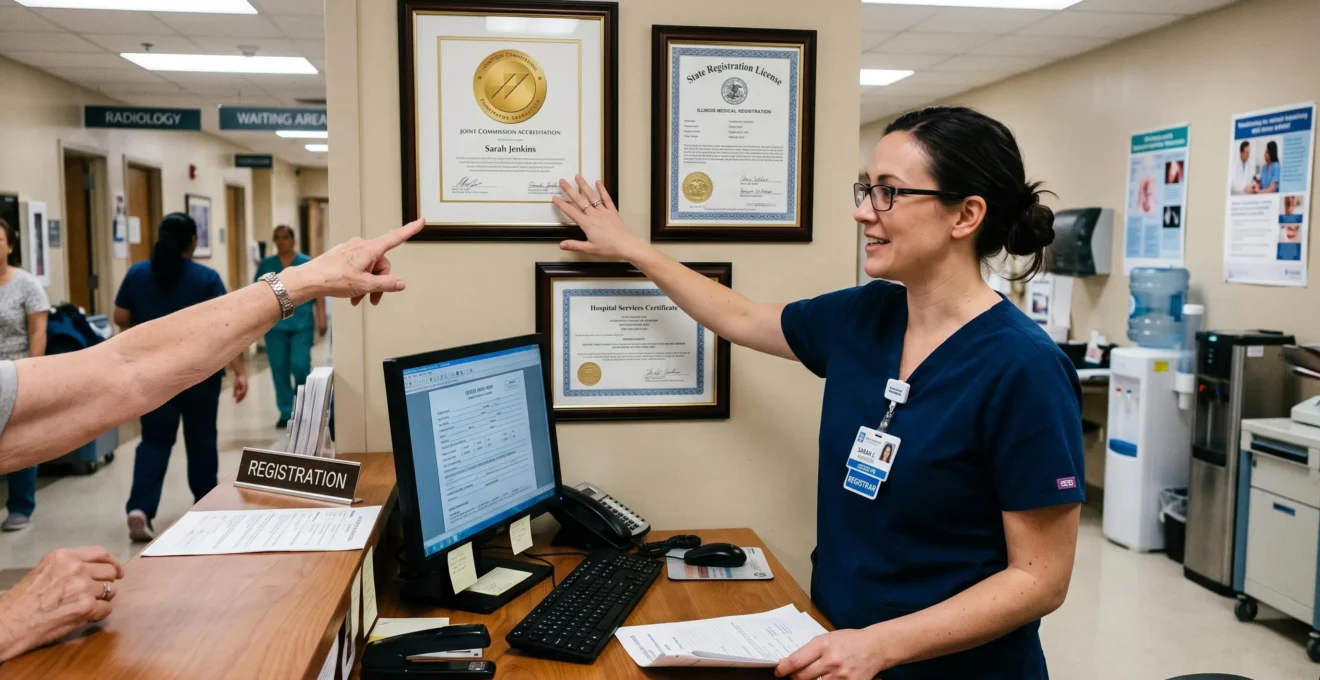
Ask for the surgeon’s full name, medical registration number and specialty. An orthopaedic surgeon performing hip replacements should be registered with the national medical authority of the country where they practise and should sub-specialise in hip and joint surgery. Request information on their annual volume of total hip arthroplasties: a regular, substantial practice is associated with greater procedural experience. During the teleconsultation, note whether the surgeon examines your imaging in detail, explains the chosen prosthesis and openly discusses risks and limits.
How do you confirm a clinic’s accreditation?
Clinics performing hip replacement should hold a recognised quality certification. In France, every public or private healthcare facility must obtain a certification issued by the Haute Autorité de Santé certification framework, which is renewed every 4 years and may be delivered with specific conditions. Ask the clinic for its current certification status, the date of the latest assessment and any mentions attached. Internationally, additional labels such as those issued by recognised accreditation bodies can also be requested. If a facility hesitates to share this information, treat it as a serious warning sign.
Transparency of the process is the third pillar. A trustworthy clinic will provide a written quote, a clear description of what is included (hospitalisation duration, implant brand, physiotherapy sessions) and a named contact for post-operative follow-up. Prices far below the usual range, pressure to decide quickly or vague answers about who will operate are classic red flags.
Warning signs before booking
- Named surgeon with verifiable registration.
- Current clinic certification shared on request.
- Detailed written quote and consent documents.
- Structured teleconsultation with your imaging.
- Clear post-operative follow-up plan.
- Refusal to name the operating surgeon.
- No proof of accreditation or outdated certification.
- Prices far below market averages.
- Pressure to pay or travel quickly.
- No plan for complications after return.
Preparing your body and medical file before the operation
A reliable operation begins weeks before travel, with a complete medical work-up and physical preparation. The goal is twofold: give the surgical team an accurate picture of your health, and arrive in the best possible condition to limit complications and shorten recovery.
A standard pre-operative assessment for a total hip arthroplasty generally includes recent imaging of the hip (X-rays, sometimes CT or MRI), a full blood work-up, an ECG and, depending on your age and comorbidities, a cardiac or anaesthetic consultation. Your surgeon will specify which examinations must be performed in your country and which will be repeated locally. Dental screening is also often requested to rule out infection sources.

How do you choose accommodation and travel?
After discharge, you will need accommodation suited to reduced mobility: step-free access, a lift if there are floors, a walk-in shower if possible, and enough space to move with crutches or a walker. An accompanying person is strongly recommended for the first weeks: they can help with meals, transport to physiotherapy and daily tasks that remain difficult. For the return trip, discuss with the surgeon the ideal mode of transport, the need for aisle seating, compression stockings and anti-coagulation during travel.
Cas pratique
A hypothetical patient in his sixties, living outside the EU with limited local access to a hip specialist, plans surgery in Nice. After a teleconsultation reviewing his X-rays, the surgeon confirms a total hip arthroplasty. He prepares his file at home, flies in with his wife, is admitted the day before surgery, spends four days in hospital and then stays ten additional days in an adapted apartment near the clinic for physiotherapy and wound checks. Before flying home, a written discharge letter and imaging are sent to his usual doctor, who coordinates further rehabilitation. This scenario is illustrative and must not be taken as a guaranteed timeline.
How do you organise follow-up after returning home?
Follow-up should be defined before you leave the clinic. Ask for a written operative report, discharge summary, imaging, prescriptions and a clear rehabilitation protocol. Share these documents with your general practitioner and local physiotherapist as soon as possible. Agreed check-points usually include wound inspection, suture or staple removal, and progress reviews at six weeks, three months and one year. Managing muscular discomfort is also part of this phase; general information on post-operative muscle pain can help you understand what is usual and what should prompt a call to your medical team.
Signs that require urgent medical advice: fever, intense or increasing pain, redness or discharge at the scar, calf pain or swelling, sudden shortness of breath. These symptoms must be assessed quickly, whether you are still abroad or already back home.
FAQ: common concerns about hip surgery abroad
Three questions come back repeatedly before patients decide to travel: how long to stay, how daily life resumes, and what happens if something goes wrong after returning home. Clear answers in advance help you make a decision aligned with your priorities and medical situation.
As you approach the final steps, keep in mind that even small details — such as learning to go walking down stairs one foot at a time — are part of a safe return to autonomy and should be practised under professional supervision.
How long should you stay abroad after hip replacement surgery?
Length of stay depends on the surgical technique, your recovery and the clinic’s protocols. Patients typically spend several days in hospital after total hip arthroplasty, followed by a period of local convalescence before travelling home. Your surgeon confirms the exact duration based on wound healing, mobilisation and the risk of blood clots. Ask for a written estimated timeline before booking your return trip.
When can you resume daily activities after the operation?
Recovery is progressive. Walking with crutches or a walker usually starts within the first days after surgery under supervision. Light domestic activities resume gradually over the following weeks, while driving, work and sport depend on the type of job, the prosthesis and your personal progress. The surgical team provides individual milestones that should be respected rather than compared to other patients.
What happens if complications occur after returning home?
Complications after hip replacement are uncommon but possible, which is why long-term follow-up matters. Any fever, unusual pain, scar changes, calf swelling or breathing difficulty should trigger a rapid consultation with your local doctor or an emergency service. Share your operative report and discharge letter immediately. A coordinated service that keeps a direct link with the operating team can also help organise remote advice or, if needed, a return visit abroad.
Can an accompanying person stay with you during the medical trip?
Yes, and it is strongly recommended. An accompanying person helps during transfers, communication with staff, and daily life after discharge, when mobility remains limited. Clinics and coordination services usually offer accommodation options suited for two people and can organise airport transfers, interpretation and local assistance.
Planning hip replacement surgery abroad is above all a question of method. By verifying the surgeon, the clinic, the preparation protocol and the organisation of your stay, you turn a stressful project into a structured, controllable path. Take the time to collect written answers at each step, keep your usual doctor involved, and only move forward when every verification feels solid. Your mobility deserves a decision built on evidence, not on urgency.